· LumenTrail team
Best Rechargeable Headlamp: What Actually Matters
Type "best rechargeable headlamp" into a search bar and you get a wall of lamps that look the same, quote the same round numbers and promise the same nights. A spec sheet alone will not crown a winner, because the numbers on it are not written the way you will use the lamp. Five criteria, checked in the right order, will. Here is the checklist, and where our own lamp sits against it.
Real lumens vs. marketing lumens
The first number you meet is the lumen figure, and it is the least reliable line on the page. Lumens measure total output at peak burst — a level most lamps hold only briefly before stepping down to protect the battery. Two lamps with the same rating can behave completely differently once you are outside: a tight centre beam concentrates its output into a column that reaches down the trail, while a diffuse flood spreads the same lumens thin across the first few metres. That is why a focused 200-lumen spot can out-throw a diffuse 400-lumen flood. Reach comes from focus, not from the headline number.
So read the lumen line the way you read a car's top speed: real, but not how you will drive. What predicts your nights is the shape of the beam — a centre spot for distance, a wide flood for the work in your hands — and whether one lamp gives you both without a swap. Our guide to how many lumens a headlamp needs breaks the comfortable ranges down by activity, and explains why the ground five to fifteen metres ahead is where an everyday lamp earns its keep, not the far end of a field.
"Most powerful" is the wrong question
"Most powerful rechargeable headlamp" is one of the most-searched phrases in the category, and chasing it steers buyers toward the wrong lamp. Maximum output costs you three things at once. Runtime collapses, because the brightest setting always drains fastest. Weight climbs, because a bigger burst needs a bigger battery hanging on your forehead. And in rain, fog or dust, the extra light bounces off the particles hanging in the air in front of your face, washing out everything beyond them — turning the power up in bad weather makes you see less, not more.
Power you can actually use looks different: a centre beam bright enough to spot a root or a kerb a few steps ahead, side LEDs that widen the pool for close work, and a low mode easy enough on the eyes to live on for hours. That combination covers a campsite, a garage and an unlit street better than any single burst figure ever will.
Runtime and modes: the spec that decides your nights
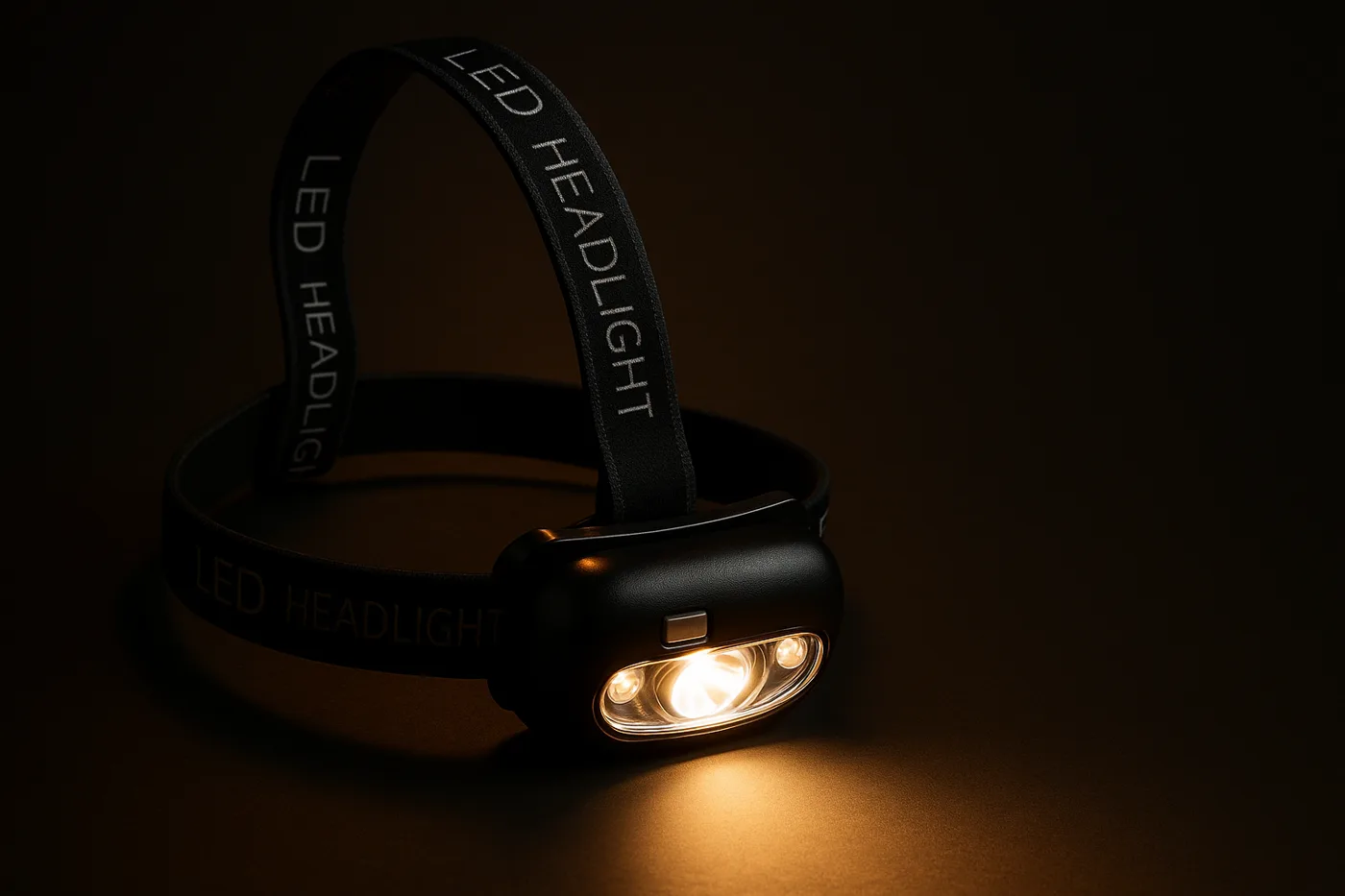
Runtime is what separates a lamp you rely on from a lamp that dies mid-task, and it is usually quoted at the setting you will use least. Headline figures are measured at peak output; what matters is how long the lamp runs at a brightness you can actually live on. A sensible benchmark for an everyday lamp is four to six hours per charge depending on the mode, with the low flood lasting toward the top of that range — enough for a full evening of camp chores, a week of dog walks, or a long power cut, on one charge.
When you compare listings, look for a runtime quoted by mode. A single number measured at maximum output describes the lamp's best minute, not its usual evening, and it says nothing about the low setting you will actually spend most of your hours on. Modes are the other half of this criterion: a lamp with a distinct spot, a wide flood and a genuinely low setting lets you spend the battery where the task is, instead of burning peak brightness to read a map at arm's length.
runtime per charge, depending on the mode you run
— LumenTrail product specifications, 2026
The charging side counts for as much as the battery. USB-C means the lamp shares a cable with your phone, so it tops up at a desk, in the car or off a power bank in the field, and a small indicator — red while charging, green when full — tells you at a glance whether it is ready. A built-in battery also removes the failure mode that kills drawer flashlights: disposable cells that die at the wrong moment or corrode inside the housing. Our charging guide covers the habits that keep a lithium battery strong for years.
Weather sealing: what IPX4 actually covers
Water resistance is written in IP ratings, and precision tells you more than a big claim. IPX4 means the lamp shrugs off rain, sweat and splashes from any direction — drizzle over a tent, a wet night run, spray on a fishing line — while staying clear that it is not built for submersion. A listing that names its exact rating is telling you what the lamp survives; a listing that just says "waterproof" is leaving you to find out.
rain, sweat and splash resistant, though not built for submersion
— LumenTrail product specifications, 2026
For most buyers, IPX4 is the practical sweet spot: it covers every rain-soaked use a headlamp actually meets, without the price and weight of dive-grade sealing you would never call on. Remember that sweat counts as weather too: a winter run soaks a headband from the inside as thoroughly as drizzle does from the outside, which is why the rating matters even to buyers who never plan to stand in the rain. Wipe the lamp dry after a wet night and it keeps performing.
Hands-free control: the criterion buyers discover last
Nobody searches for a motion sensor the first time they buy a headlamp, and almost everyone names it as the feature they use most once they own one. The reason is simple: the moments you need light are the moments your hands are busy. A small infrared sensor next to the LEDs reads a hand waved a few inches in front of the lamp and switches it on or off — no button to hunt for with gloves on, grease on your fingers, or firewood in both arms.
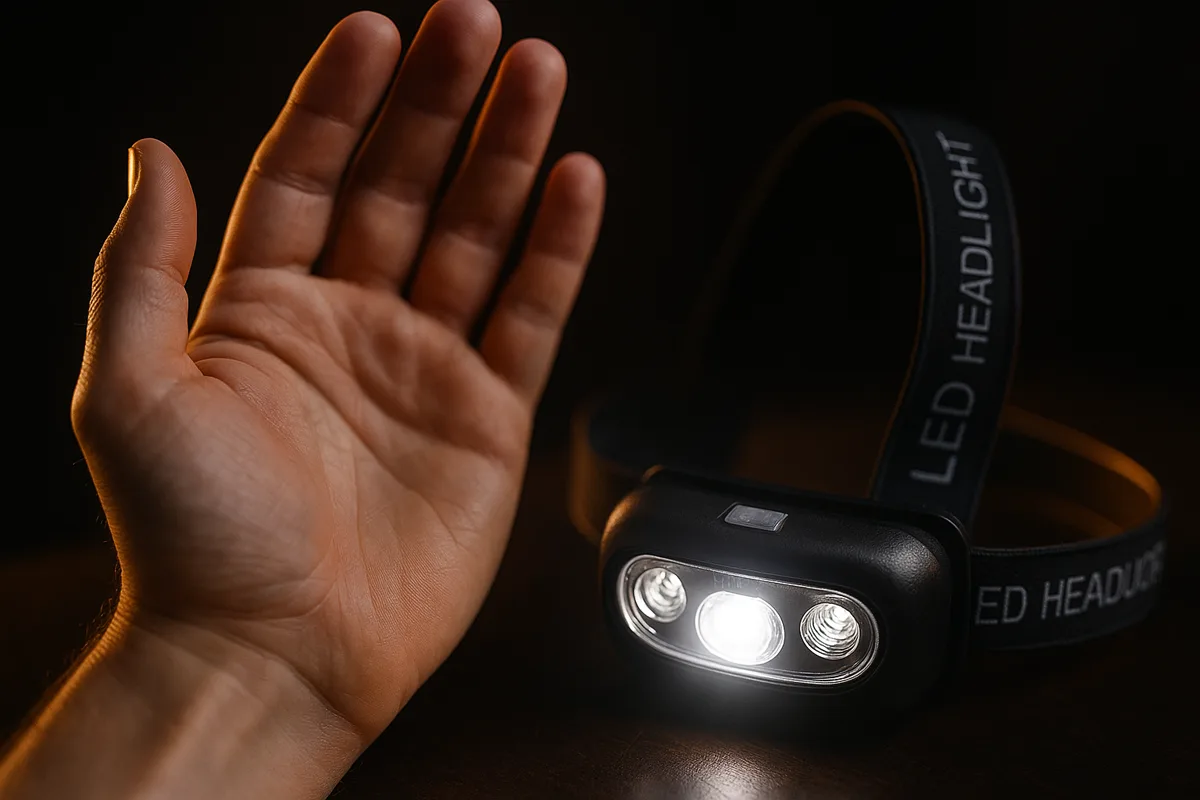
A good implementation reads only a deliberate wave up close, so stray triggers stay rare, and keeps a physical button so you can switch the sensor off entirely for close-up work or before packing the lamp in a bag. We wrote a full page on how the wave sensor works, including when to run it and when to turn it off.
Comfort: the band decides whether the lamp gets used
A lamp that presses, slips or nods with every stride gets left in the drawer, and no beam spec rescues a lamp you stopped wearing. Three things carry this criterion. Weight first: at only a few ounces, a lamp sits on your forehead for an evening without announcing itself. The band second: a wide elastic strap that adjusts from a child's head to an adult's, over a bare head, a beanie or a hood. And the tilt third: a head that ratchets downward lets you drop the hot spot onto your hands or the next few steps instead of blasting the middle distance.
The band range matters more than it looks on paper. A lamp that adjusts from a child's head to an adult's is the one that gets shared on a family camping trip, handed to a kid for the walk to the toilet block, then worn over your own hood when the temperature drops — one purchase covering three heads instead of one.
Fit is also half the answer to bounce on a run — the other half is how snug you wear it, which our fitting guide walks through band by band. And if your nights are mostly running, the criteria shift enough that we wrote a separate guide to choosing a running headlamp, where weight and beam angle take over the top spots.
What makes a good headlamp brand
"What is a good brand of headlamp?" is really a question about trust, and you can settle it without recognising a single name on the box. Four checks do the work. Does the brand publish precise specs — runtime by mode, an exact IP rating, real dimensions — instead of one big round number? Does it explain how it chooses what it sells? Does it show its buyer reviews in full, including the reserved ones, rather than a hand-picked three? And does it back the purchase with a money-back guarantee long enough to cover real nights outside?
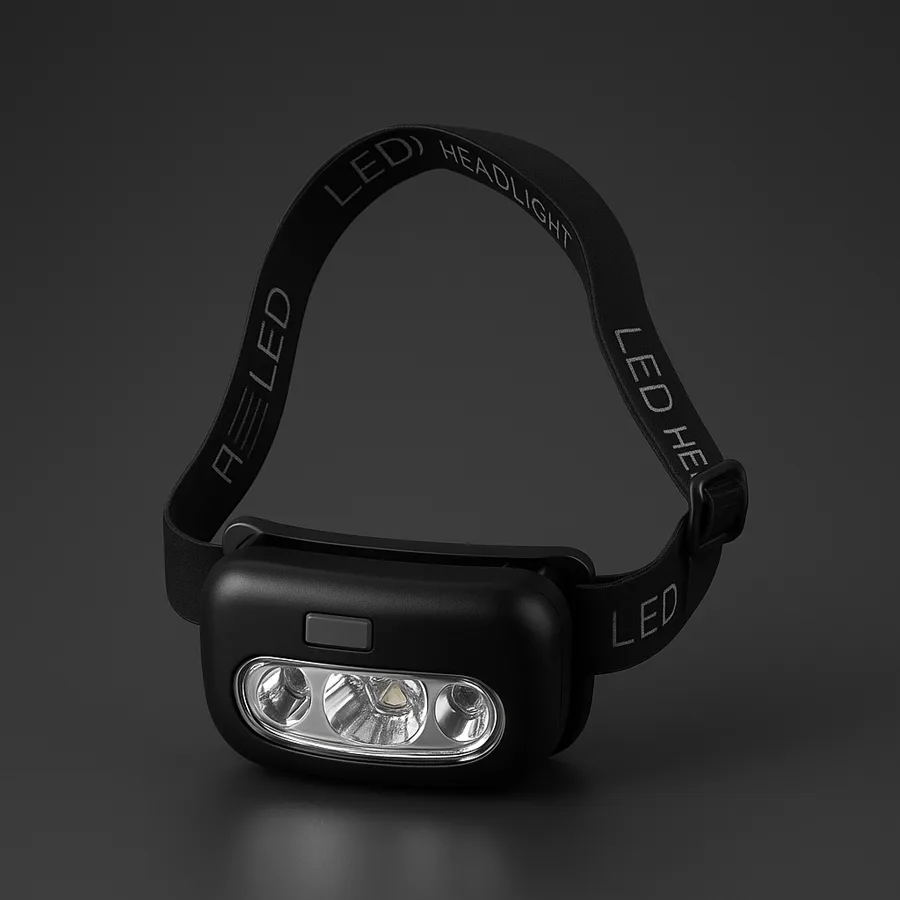
A brand that passes those four checks has told you what its lamp does before your card comes out — and given you a way back if your nights disagree. That standard travels: apply it to any lamp you are comparing, whatever the name on the strap.
So what is the best rechargeable headlamp on the market?
The one that scores on all five criteria at a price that lets you keep a charged lamp everywhere you need one — because the light that saves your evening is the one already in the car door, the camp bag or the kitchen drawer. That is the balance the LumenTrail rechargeable headlamp is built around: a bright centre beam plus side LEDs for spread, four to six hours per charge, USB-C charging with the cable in the box, IPX4 sealing, the wave sensor, and an adjustable tilting band that fits kids through adults — for $24.95 with free shipping. Every order carries a 30-day money-back guarantee, so the five criteria get judged where they should be: on your own dark street, not on a spec sheet.
Free shipping, typically 6 to 10 business days · 30-day money-back guarantee
Best rechargeable headlamp FAQ
What is the best rechargeable headlamp?
The one that gets five things right: a focused beam judged on reach rather than a headline lumen figure, a runtime you can live on, a precisely stated water rating, hands-free control, and a band light enough to forget. The LumenTrail lamp is built around exactly that balance, at a price that lets you keep one in every bag.
What is the most powerful rechargeable headlamp?
The biggest burst figure rarely helps. Peak output drains the battery fastest, adds weight, and bounces off fog, rain and dust right in front of your face. Usable power is a focused centre beam for distance plus a wide flood for close work — a combination that covers far more nights than one huge number.
What is a good brand of headlamp?
Judge the brand by what it publishes, not by the name. Precise specs with runtime by mode and an exact IP rating, selection criteria you can read, buyer reviews shown in full, and a money-back guarantee. A brand that offers all four has told you what its lamp does before your card comes out.